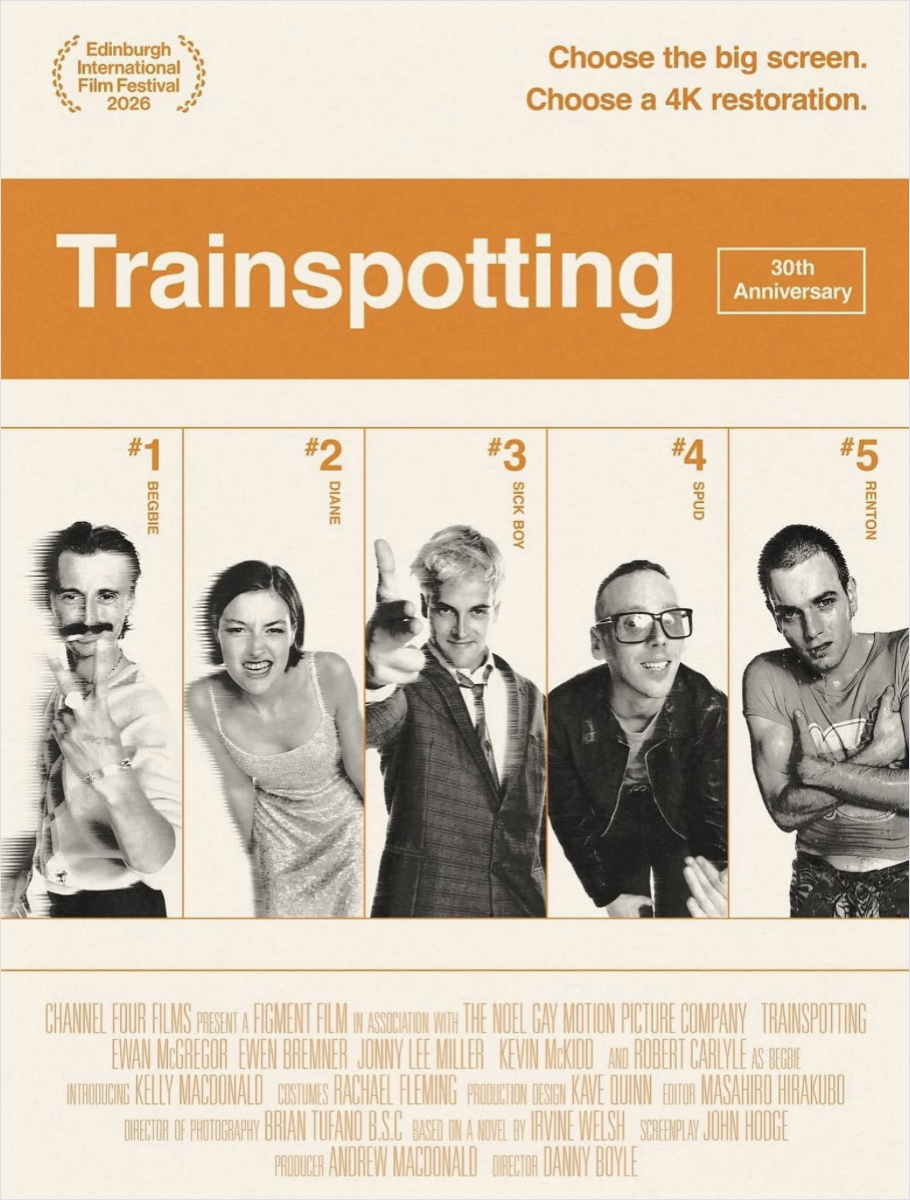
Screenplay by John Hodge (based on the novel by Irvine Welsh) Directed by Danny Boyle Starring Ewan McGregor, Ewan Bremner, Jonny Lee Miller, Robert Carlyle, Kevin McKidd, Kelly Macdonald Channel 4 Films – in selected cinemas now
I hadn’t seen Trainspotting on a big screen since 1996 and in purely cinematic terms it holds up well. It’s a terrific piece of filmmaking which was clearly a trailblazer and trendsetter in multiple ways – not least because of its fantastic soundtrack and the fun of seeing the two Ewans, Jonny Lee Miller and Robert Carlyle in younger, thinner days.
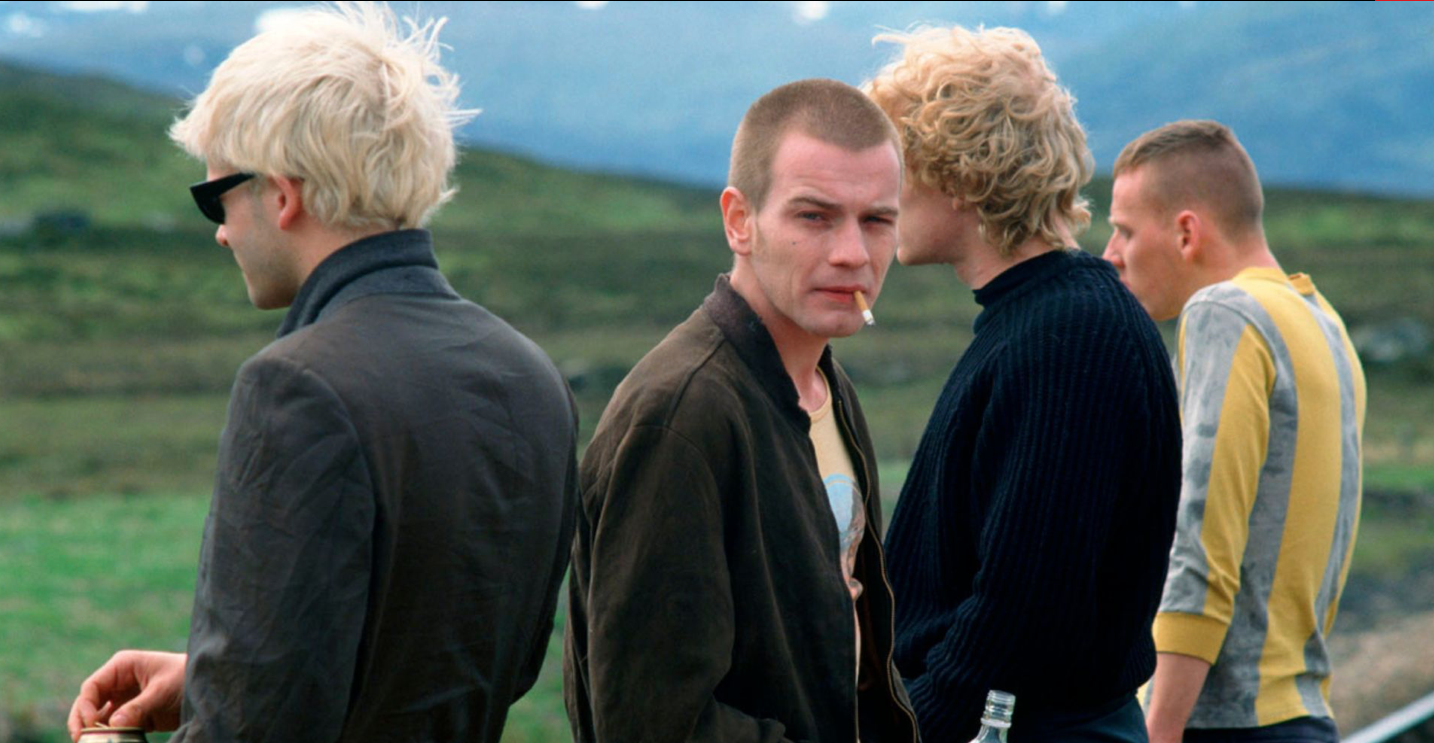
Jonny Lee Miller, Ewan McGregor, Kevin McKidd & Ewan Bremner in younger, thinner days
Having said that, I had forgotten how profoundly depressing it is – and that’s not just because of the dead baby crawling along the ceiling. It was hailed at the time for its ‘dark comedy’, but in 2026 it’s just… dark. The jokes such as they are feel shallow and flippant – and the mannered, affected dialogue hasn’t aged well at all. Watching from the shadows of my seventh decade, I felt a certain nostalgia for the ‘Cool Britannia’ of the 1990s, when a tale of drug-fuelled hopelessness felt emblematic of everything the country was going to leave behind now that Things Could Only Get Better.
I remembered rooting for Ewan McGregor in his battle to kick free of his so-called friends and his own self-destructive addiction, but on a Monday night in Stockport in 2026 it was hard to give a shit about any of the characters – even Renton. I remember Ben Elton doing a great riff on how we might not think Trainspotting was so cool if Renton had a West Country accent. I wonder if back in 1996 we cared more about the psychological waste surrounding addiction. The incongruous humour was a way of expressing that ambivalence. In 2026 I’m not sure anyone has much time for addiction. This could just be me getting old, of course, but I have a gut sense that the zeitgeist has changed and the opprobrium directed towards Class A drugs is more about the lives lost and the cost to the communities ravaged by the production and transport of the stuff. Why should we care about a bunch of (white) Scottish wasters when the real damage is happening somewhere far off-screen?
Trainspotting is a fundamentally forgiving film which sits uncomfortably in unforgiving times.
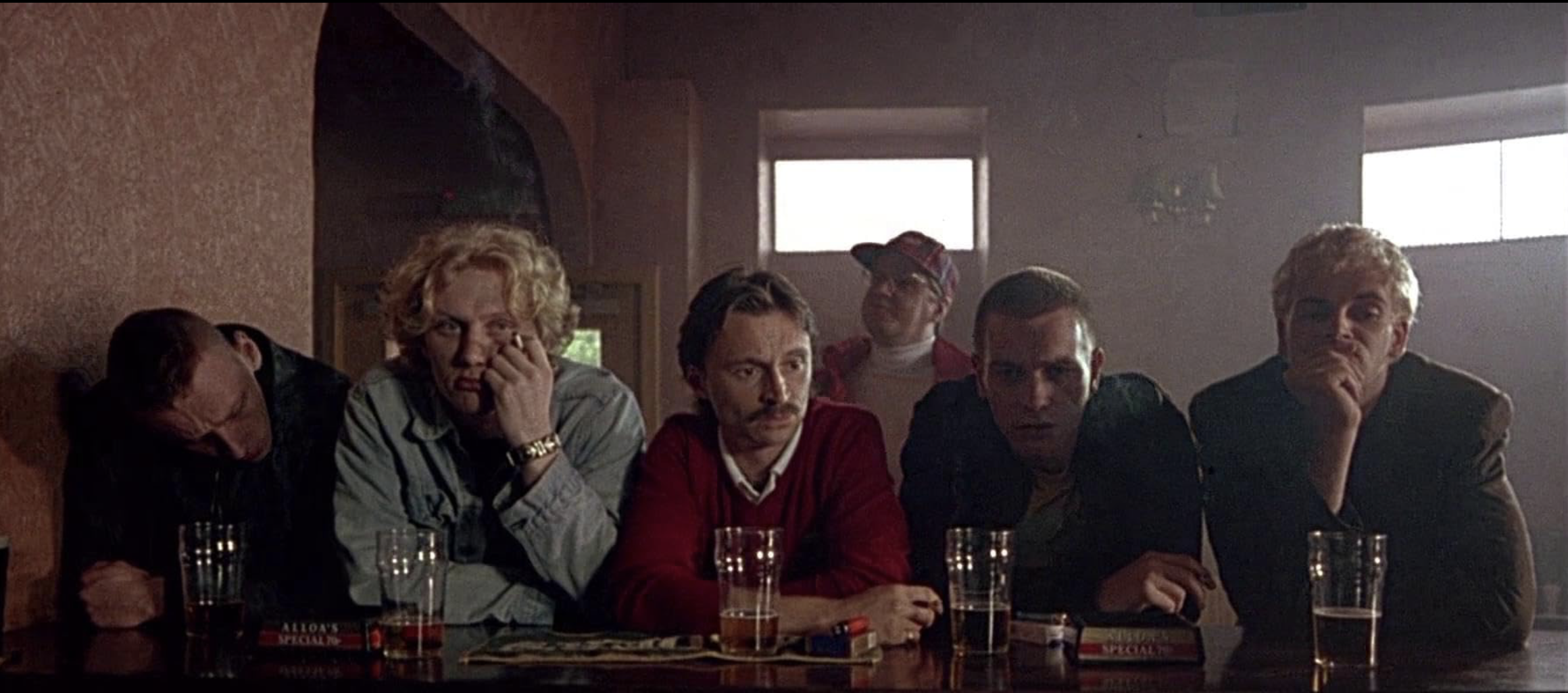
Ewan Bremner, Kevin McKidd, Robert Carlyle, Ewan McGregor & Jonny Lee Miller drowning their Nietzschean voids in Trainspotting
But perhaps the most salutary part of the experience was settling into our seats and watching the rest off the audience filing in and my wife and I whispering to each other: ‘He wasn’t born, she wasn’t born, they weren’t born…’ I think we were the oldest people in the screen, and perhaps the only ones to have seen it on its initial release. Now, that’s depressing! 8/10
Jason Arday in happier times, proudly carrying the Olympic torch
Fibs
I seem to have known an awful lot of bare-faced liars in my time. Or were they just fibbers, elaborating the mundane for entertainment value, harmless Baron Munchausens in search of validation or perhaps for something more?
In 1980, at university, a student colleague claimed to have attended the Royal Ballet School as a child. I had no reason to doubt him. We were drama students and many of us had theatrical history pre-dating our time at university. But then a reliable contact with connections to the school said they had never heard of this young man, throwing his story into doubt. When I asked him if he still danced he told me he’d had to give it up due to contracting cancer. ‘Oh my god,’ I remember exclaiming, ‘what sort of cancer?’ I still remember the slight hesitation before his reply. ‘Of the knee,’ he blinked, although it was unclear which knee had been afflicted. Perhaps it was both. It was certainly an anatomically appropriate excuse, and I wasn’t about to call him out for lying about such a terrible disease. Why would anybody lie about something so serious? I soon found out exactly why. This guy had the hots for someone in the year above. He was desperate to sleep with her, pleading that his cancer was so serious he didn’t know how much time he had left, suggesting that her consent would be an act of compassion. I still couldn’t bring myself to accuse someone of lying about having cancer, but luckily the young woman in question parked her compassion, and held her ground – and amazingly the guy’s knee was just fine. So much so, that I saw him dance in a show about a year later. He made a decent stab at it, but it was, to me, an impression of someone who had studied ballet rather than the skill itself. Many of us had stopped believing a word he said by then, and just rocked along with his biographical elaborations quite happily. We were drama students after all.
In 1983, in a bar in Cardiff, a charming young actor regaled me with stories about being on tour as a wide-eyed 16-year-old with theatre director Peter Brook in Africa along with Helen Mirren et al, largely debunking Brook’s account of the near magical cultural exchanges that had occurred in remote African villages. I lapped it up, always keen to debunk anything that smacked of pretension, only to discover a few years later, reading Conference of the Birds, John Heilpern’s book about the tour, that there was no reference to anyone even vaguely resembling the fellow who had waxed so lyrically to me. I felt like an idiot, but I had wanted to believe him. The young actor in question was black, at a time when there weren’t that many black actors in the U.K. Did that make me more inclined to believe him due to my own liberal bias? Was I just busting to have old, white Peter Brook taken down by a young black guy who was actually there! I would hope not, but I genuinely can’t say whether I would have been quite as willing to believe him had he been white. I just don’t know, but I suspect I am guilty as charged.
A few years later I was working for a socialist feminist theatre company of the sort brilliantly parodied in David Nichols’s One Day. I was lodging with an older gay actor who admittedly had the air of exaggeration about him, but who, one morning over breakfast casually recounted how the night before he had been violently raped by three men he’d met in a bar. I remember my jaw dropping. I’d never met anyone who openly talked about being a victim of rape before. Surely he should call the police, have a medical check up at the very least! He didn’t seem too bothered. Oh, it’s just one of those things, he shrugged, and never mentioned it again. I wasn’t about to accuse someone of lying about something so serious – especially not a gay socialist feminist (it was 1984, and aged 24 I was still generally convinced that only Tories told lies) but when, after another year or so, I realised that many of his other tales were provably fabricated, I started to wonder about the awful sexual assault. I never did question him about it. I mean, you can’t can you? Who would lie about rape? The idea he might have is one of those bruises that never quite heals.
Two years after that another friend and work colleague, a senior creative at a large regional theatre, regaled a group of us with his account of the man who, sitting opposite him on an Inter-City 125, ejaculated onto the table between them in his sleep. I knew he was fibbing because it was an urban myth doing the rounds at the time, but it would have spoilt the sociable vibe to have called him out for claiming it as his own experience. Later when the same person told me how he had totalled his parents’ Porsche by having a fit while driving up the M1 at 80 mph – despite no history of epilepsy – I was less comfortable. Apparently he’d been completely uninjured because the fit had relaxed him. He’d miraculously not collided with any other vehicles, and the next thing he knew, he had woken up in hospital surrounded by police convinced he was a joy rider who had stolen the car. But why would anybody lie about something as serious as epilepsy? Perhaps the tale was true, but to be honest, I still don’t know what to believe of that and several other fantastic stories he told me. Forget about how, today, we are taught to distrust pretty much anything we read on the internet, it was 1986 and I was starting to lose trust in anybody (or perhaps I was just annoyed at myself for being such a mug).
In 1991, I was reunited with a long lost relative who had disappeared from our lives nearly thirty years earlier. It was an emotional reunion and we got on famously, but she, too, had a tale of casual rape, this time by an intruder who had broken into her apartment in LA a few years before. I was wide-eyed with horror and keen to know if the perpetrator was ever brought to justice. Like my actor friend, she just shrugged it off. It was just one of those things and she’d never reported it – not the break-in, nor the rape. What was the point? I could think of a few reasons, but once again, I wasn’t about to question the story, after all, the difficulty in securing convictions for rape is well known. Unlike my actor friend, this person was ‘blood’, so there was no way she would lie to an actual relative, plus surely his tall tale must have been a one off. A few nights later, my concern for her went up another notch. She told to me that she was in the early stages of multiple sclerosis. I was genuinely distressed, and now additionally relieved to have found her again in time before the disease took hold.
But…
…she never mentioned her illness again, and she’s still alive today 35 years later, well into her eighties. This was far more disturbing in retrospect because she had also told me stuff about my mother and father and my early life and I now had no idea whether I could believe a word of it. When later I did call her out on the veracity of something far more trivial than lying about a serious degenerative condition such as MS, she told me to ‘f*ck off and never speak to her again’, blocking me on social media. I haven’t heard from her since. I learned later that some of her versions of our family history had caused considerable distress with at least one other elderly relative.
Arday’s story made many front pages
Just a few hours before the terrible news came through about Jason Arday’s death last Friday evening (at the time of writing there is no official ’cause of death’ although it has been widely assumed to have been a suicide) I had been pondering the story, as a dramatist constantly on the search for inspiration and fascinated by the more eccentric recesses of the human condition regularly does. It was garnering acres of coverage, largely in reaction to – or because of – racism with regard to his appointment as Cambridge’s youngest ever professor of colour. But the story was also everywhere because it is ‘Silly Season’ in the UK and there’s not much else going on for journalists to chew on (this is a far greater factor in this tragedy than many have credited).
I’ve been fascinated by tales of deception for much of my life for very personal reasons. My father was bipolar, and, while not a fantasist exactly, had been prone to extreme delusion at the height of his manic cycle (at one point believing himself to be an Old Testament prophet called Joshua). My stepmother, who brought me up, and who I always believed to be a pillar of stability, honesty, and grounded good sense, had, I discovered shortly after her death in 1997, led a dramatic double life, one which took me to the files of Special Branch at the National Archives at Kew and turned my own world upside down. That is quite literally another story which I won’t expand upon here. Consequently truth matters to me at a fundamental level, perhaps anally, obsessively so.
In His Own Words
In that spirit, not content to rely on second hand reports of plagiarism and fabulist exaggerations as to Arday’s life story, I had spent a couple of days going to as many primary sources as I could, watching an assortment of videos of Arday’s lectures and interviews freely available online as well as delving into a selection of his academic output, also freely available to anyone wanting properly to inform their understanding of the man. If I was to form any kind of judgement it should be on the basis of the man’s own words.
That his own account of his life story was at the very least elaborated seemed plain to see, as did his questionable talent as an academic. I challenge anyone to have a go at unscrambling Arday’s academic word salads and tell me if they come out of the experience with their brain intact. In the course of my own work I’ve trawled through a fair number of PhD papers so I’m used to the academic style but leaving accusations of plagiarism to one side it would be stretching generosity to its extremes to describe Arday’s work as ‘the best in the world’ as Professor Hilary Cremin did in a BBC news report upon his appointment as the university’s youngest ever professor of colour in 2023.
Professor Hillary Cremin speaking to Jason Arday in a BBC News Report in 2023
As for plagiarism I have no primary source evidence of my own to offer a properly informed opinion but as with my mendacious friends and relatives once I’d been spun whoppers in one regard, it becomes hard to trust anything else they may have told me.
However, what distinguished this case from my own anecdotes was Arday’s very public profile. Being bull-shitted by a few friends and relatives over the years didn’t really matter to anyone but me (and perhaps the woman being harassed for sex on the basis of a bogus cancer claim) but Arday was firmly in the public arena, so discerning truth from falsehood becomes a matter of public interest whether we like it or not.
At this point many liberal commentators have rightly asked: Would a white male academic accused of plagiarism have attracted this kind of press attention, mockery, and downright hostility? The answer is categorically ‘no’. So the media is collectively racist, right?
But, equally, it is fair to ask whether the appointment of a white male professor to Jesus College Cambridge would have attracted the attention Arday’s did? Would the BBC have run a news feature? I’ve seen similar pieces that were run by CBS News and a variety of other outlets. Undeniably, Arday was being promoted as a poster boy for the university on the basis of his identity and life story. The BBC report celebrates (some might say ‘objectifies’) his ethnicity, filming him in beatific profile against soft focus Cambridge gothic. If we then demand Cambridge be held to account for putting a vulnerable adult like Arday in the front line, and the BBC and other media for joining in with this celebration of progressive inclusivity, surely we also have to ask (however painful it may be) to what degree Arday was himself complicit in becoming such a poster boy. He would have every reason to do so in the cause of being a role model for upcoming academics of colour and those managing their neurodiversity. But, the argument goes, he was being used by self aggrandising white liberals. That seems blatantly to be the case, but as soon as I say it out loud, I have stripped Arday of any agency of his own. I am painting him purely as a victim. That can’t be right either.
Arghhh!
Jason Arday framed against Cambridge Gothic in 2023
Aside from his professorship Arday was a trustee of the British Sociological Association; a trustee of Autism Action; a patron of the Adult Literacy Trust and Get Further; a former trustee of the Runnymede Trust; a member of the itv Advisory Council; he sat on the Centre for Labour and Social Studies National Advisory Panel and the Royal Society Diversity and Inclusion Committee; and was a School Governor at Shaftesbury Park Primary School. He is also listed as being on a variety of editorial boards, and as visiting or honorary professor at an assortment of universities including Durham, Ohio and the Nelson Mandela University in South Africa – although some of these positions have been disputed. And that’s before we get to his regular media appearances on shows such BBC’s Question Time, Sunday with Laura Kuenssberg, as well as being a Guest Editor on Radio 4’s Today Programme in December 2023.
It’s counterfactual to argue that the guy was somehow being held hostage. He was putting himself out there – for good reason. We can’t have it both ways. He’d told a story of himself to win his way into the hearts of the establishment. There’s nothing inherently wrong with that – as long as that story is true. He wasn’t the first person to do it (Camila Batmanghelidjh comes to mind) and so his agency in that cannot simply be ignored. If those bodies had publicly doubted him and denied him access to those various positions in order to protect his mental health they would rightly be widely condemned. So is it entirely fair to suggest that they were using him as a mascot? He was using them as well. That is plain to see. It was a mutually beneficial arrangement.
But when that story he told started to fall apart is it entirely fair to classify it as wholly racist to hold that individual to account?
That was why I was ‘pondering’ just as the news came through. In an interview with the Guardian (1st August 2026) Arday is quoted as saying ‘Why would I lie?’ Interestingly, the rhetorical nature of this question doesn’t exclude the possibility that he was, not least for the reasons listed above.
‘Why Would I Lie?’
As with my porky-telling pals and relatives, the real issue was the matter of ‘intent’. Were they and Arday fibbing because it was fun? Or a habit? Or a fundamentally innocent expression of insecurity in search of affirmation? Or a neurodivergent tick that meant they failed to appreciate the need for veracity or the consequences for others of dishonesty? Consequences I’ve tried to illustrate from my own experiences at the start of this essay.
Or was there a darker, more manipulative purpose behind his and their deceptions?
Emotionally, I was inclined to believe it was a combination all but the last of these. Arday was just such a lovely softly-spoken guy who pretty much everyone loved, surely there was no malign intent. The first time I noticed Jason Arday was when he did that guest edit of BBC R4’s Today Programme at the end of 2023. I was blown away by his story. It was on the BBC – their flagship news programme no less – and it had to be true. I had no reason to doubt a word he said. I was inspired.
But last week, taking a closer look at some of his interviews I noticed a pattern of sorts. In an interview with Krishnan Guru-Murthy on Channel 4 (Sept 22, 2023) near the beginning of their conversation Arday makes a point of telling KGM that when he first went to university he only had a reading age of 9. Guru-Murthy gawps in disbelief. ‘Really?’ he says, momentarily incredulous. I imagine that he, like me, is wondering if you can get into a university with a reading age of just 9 – even if it is just to study PE (sorry PE people, that was uncalled for)? ‘Yeah!’ says Arday, as if Guru-Murthy is frankly a bit daft for even questioning it. But really? The course was for a BA in Education Studies with Physical Education at St Mary’s, Twickenham, and Arday had just turned 20. They genuinely accepted someone with a reading age of just 9? Of course I can’t disprove this but like Guru-Murthy, for me something about it doesn’t sound right. However, after this moment of incredulity, the highly esteemed journalist just accepts it without further question. It is, for me a ‘roll-over’ moment. Once you’ve bought into that part of the story there’s no turning back.
Krishnan Guru-Murthy’s moment of doubt interviewing Jason Arday in 2023
In another interview, for the Sanger Institute (8th December 2021) David Adams opens by asking Arday, still working for Durham university at the time, about the defining moment of his career. He tells Adams the extraordinary story of how he did his PhD at John Moore’s University in two and a half years not only while raising a young family (having recently had his second child), but suffering from a brain tumour. He then recounts how he had the operation to remove the tumour – immediately followed by a stroke! – a mere two weeks before his PhD viva. This caused a loss of memory (no shit!) so he had just two weeks to completely relearn his own PhD thesis. I felt myself going all Krishnan Guru-Murthy when I heard this story coming from Arday’s own lips. Really?! Aside from the improbability of doing a PhD in less than three years with a brain tumour and a new family – it is surely beyond credibility that he did a viva two weeks after brain surgery AND a stroke. I mean, it took me a week to recover from my weedy hernia operation let alone brain surgery followed by a stroke. At the very least John Moore’s University would have postponed the viva until their student had had time to recover, but interviewer David Adams nods admiringly. ‘That sounds amazingly stressful,’ he says, eyes widening. Even me at my most gullible in the 1980s might have had a millisecond’s pause and a question or two. It’s another ‘roll-over’ moment. Once you’ve bought into that you’ll buy into anything. After all why would anyone lie about something so serious as not just brain cancer, but BRAIN CANCER AND A STROKE?!?!
The Sangar Institute’s David Adams mastering the art of understatement in 2021
In both cases, Arday drops the plausibility bomb fairly early in the exchange, and both times it puts him in complete control of the dialogue, even with a skilled interrogator like Guru-Murthy. There is ‘method’ to it. But it’s still impossible to know how deliberate it is or whether this technique is simply a kind of fabulist’s instinct, learning over a lifetime how such incredible stories land best.
The Plots Thicken
I’m not going to re-litigate the multiple claims and counter claims around the rest of his self-declared life story. His autobiography Great and Unfortunate Things isn’t published in the UK until 27th August so we should reserve judgement until we’ve read it, however many of the key ‘plot points’ are in the public domain already – and they are plot points – with significant disparities widely reported between the pitch document and the book itself (co-written with Eve Claxton). As well as the triumphant story of overcoming non-verbal autism and an adult journey into literacy, you can pick between testicular cancer and brain cancer; months in a coma with locked-in syndrome following a road accident (with the added drama of the medics recommending to his mother that his life support be switched off); a racist attack followed by a chance opportunity for restorative justice; the same racist attack causing lifelong epilepsy and seizures which Arday recounts to Andy Murray in 2012 along with a whole array of remarkable sporting and charitable achievements; not to mention encounters with Brazilian wise women and sooth saying midwives. I guess any or all of these could be true. I’m not going to rehash second hand rebuttals, but if I do sound doubtful it’s because I’m a writer and they sound exactly like plot lines – my very bread and butter – and not real events. This is a feeling I had long before I read an attack piece comparing Arday’s autobiography to story lines in Neighbours and Home and Away. I wrote variously for Holby City, Emmerdale and Casualty for over twenty years and even in the writers’ room we would balk at the implausible list of medical crises we’d inflicted on our lead characters. Arday’s self-proclaimed medical history makes us look like amateurs.
In Plain Sight
The morning after Jason Arday died, (Saturday 15th August 2026) the BBC’s Today Programme (who had hosted Arday as Guest editor three years before) replayed a clip from an interview he gave to lead presenter Nick Robinson. Robinson had asked him about the debate surrounding diversity and how it’s defined. Arday replied, and I quote him here verbatim:
‘A lot of those conversations, my humble and opinion of kind of operating on the periphery of, kind of, societal debates, and I think one thing that’s really important, is that in the last couple years that peripheral conversation has been brought into the societal centre and I think it is really important that we kind of address all these kind of intersecting variables, and how they prohibit people‘s ability to become socially mobile.’
Jason Arday as Guest Editor on BBC R4’s Today Programme December 2023
I listened to Jason’s dulcet tones, and as I had, slightly hungover on my Christmas break in 2023, I wanted to hug him. He just sounded so… lovely. But that sentence (if you can call it a sentence) barely makes sense. It’s peppered with meaningless jargon such as ‘societal centre’ and ‘intersecting variables’. I suppose what he’s saying is ‘the mainstream takes more notice of racism than it used to’ i.e. he’s using fancy words to state the bleeding obvious. I quote Arday here not to mock him but to ask, was that really the standout clip The Today Programme thought fitting as a memorial to a man who had been hailed as ‘the best in the in the world’ by Cambridge University? Arday’s use of language reminded me of my dancing student friend back in 1980, doing a passable impression of someone who might have been to the Royal Ballet School as a kid, but without the actual ability to prove it. You could believe his story if you really, really wanted to.
The Price of Shame
Saying all of this, many of those crying ‘shame’ on those who filled their column inches and podcasts with Arday stories have asked: ‘So what if he elaborated his CV? So what if he indulged in a bit of plagiarism. He isn’t the first and he won’t be the last, so not only is it racism to bang on about it, but does it even matter? Surely it’s par for the course in academia. What crime was he guilty of? What harm did he do to anyone? And in relentlessly picking holes in Arday’s account of his life story the media put him under unacceptable pressure and they have serious questions to answer about their behaviour. They exposed their own racism by embarking on a feeding frenzy on something essentially trivial – and then, once he’d resigned, it is beyond question that should have just left him alone. It was no longer any of their business. It was nothing less than a racist witch hunt. They hounded him to his death.
I have been greatly affected by suicide in my life – my mother took her own life when I was a child – and I have lost four other friends and associates the same way – so it’s not something I take lightly, but on 6th August, The Guardian, who were largely sympathetic to Jason Arday, reported that he’d told them he had got a 1.4 million deal from Simon & Shuster for his autobiography. He didn’t specify whether it was pounds or dollars but a considerable sum in the world of publishing either way.
Jason Arday’s Autobiography for which he claimed to have received 1.4 million pounds… or perhaps dollars.
Both Yates’s and Arday’s deaths are still both terrible, terrible tragedies but let’s not be collectively simplistic about it. Let’s not be binary. I’d say Arday deserves more than that. If it’s important to grant them agency, we then have to ask whether either of them was in a state of mind to make such exposing deals?
Publish and be Damned
So I guess that asks questions of publisher Simon & Schuster. If the reports are true that they demanded significant changes from Arday’s original proposal (eg regarding exactly which cancer he had – brain or testicular) then presumably they were aware that he was making stuff up. At this point they have a duty of care. We might argue that they should have refused to publish something that could expose a vulnerable adult to humiliation and mockery. But they might argue in return that if they did, they would then be accused of censorship, and even racism; and that to say that Arday had no responsibility whatsoever for his predicament infantilises him – once again portraying him solely as a victim and stripping him of agency.
Having said that, I have had personal experience of a well known publisher pressuring me to change elements of a memoir to fit with a list of suggested anecdotes of their choice. I kid you not. In that situation I was eventually forced to exit stage left – sacrificing an extremely important contract – but if I had stuck it out and succumbed to that pressure then I would be fully responsible for the consequences. I should add that I received very good counsel from my literary agent in this regard, so I think it’s fair to ask what role the agency Aevitas, who were presumably representing Arday’s interests were taking with regard to his well-being and reputation.
My own bruising experience led me to wonder whether Raynor Winn author of The Salt Path was ‘encouraged’ to ‘elaborate imaginatively’ by her publisher before she too was subject to humiliation and derision – although I have no evidence on this either way. You can argue that Mr Arday and perhaps Ms Winn weren’t as street wise as a grizzled old hack like me – but it’s by no means a simple thing to intervene and decide that someone as lauded as Arday isn’t fit to publish.
Raynor Winn’s humiliation was front page news in The Observer round about this time last year – also in the ‘Silly Season’
On the flip side his story also reminded me of a writer friend of mine who found themself at the centre of a critical firestorm with a play they’d written for a reputable theatre company. They were totally unprepared for the ferocity of the attacks they endured. ‘[The theatre] told me everything I was doing was great,’ my friend told me, ‘they just blew smoke up my arse,’ going on to describe how their employer’s enthusiasm meant they lost all critical judgement of their own work. In the BBC news report where Hilary Crenin tells Arday he’s ‘the best in the world’ the young man positively glows. Perhaps he came to believe it, with the loss of critical judgement and self awareness that ensues from that.
Since Friday night, I have also found myself thinking about fantasist, fabulist yachtsman Donald Crowhurst who seemed to have been a decent guy in many ways, but who painted himself into a corner with his own fabrications, and ended up drowning himself rather than face mockery for having faked his solo round the world voyage in 1969.
The pressures on Arday were, we assume, more than he could bear, but we do him a disservice by resolving that he was simply hounded to death by a vicious, racist media – even if he was hounded, and even if parts of the media are racist. By concluding that he’d still be here had we sympathetically turned a blind eye to his fabulist shortcomings we veer dangerously close to a sort of reverse engineered form of emotional blackmail.
The Fault, Dear Brutus
I’m not convinced that suicide works like that. We won’t solve the epidemic of (male) suicide by stripping anyone with suicidal ideation of agency. Just a few months ago I ran the Manchester 10k in support of the suicide prevention charity #AndysManClub. I’m proud to report that I raised around £1,400 – but that was to provide support and help young men improve their mental resilience should their lives take a downward turn. No one seriously believes that we can prevent suicide by ensuring the world will never hold you personally accountable for your mistakes. We have to acknowledge, however painful it may be, that Arday played a part in his own downfall. It’s certainly fair to say that those who profited from his success had a far greater duty of care than they appear to have exhibited, but he was a grown man in his forties who nurtured and enjoyed his role as a standard bearer for inclusion – not just for race but also neurodiversity – across many media outlets and who took a considerable amount of cash to put his life story – be it fact or fable – resolutely into the public domain for his own financial gain.
And all this is before we get to the emotional consequences for those who put their trust in him; the professional consequences for those denied opportunity by the advantages he garnered on the basis of his personal narrative; and the reputational damage, not to the institutions (who only have themselves to blame) but to the worthy and vital cause of DEI itself – which Jason Arday did undeniably exploit, making it central to his mission. He was, by all accounts, a sensitive chap, so, perhaps in the end, he knew that.
He should have been better advised but his tragedy is not quite the binary tale of black and white, right and wrong we might want it to be. Arday is not the only literary, academic or journalistic figure to be accused of fakery and to face public opprobrium in the extreme. Raynor Winn (author of The Salt Path still disputing the claims made against her), Stephen Glass (disgraced American journalist caught faking stories for The New Republic in the late 1990s), Johann Hari (a similarly disgraced British journo, faking stories for The Independent newspaper) and Grey’s Anatomy writer Elizabeth Finch (who faked bone cancer, later becoming the subject of a gripping and merciless documentary series, Anatomy of Lies) are just four other names that can testify to that, suggesting that the desire to fabricate comes from deep inside the individual’s psyche and is not solely precipitated by discrimination or prejudice or indeed neurodiversity as some have commented.
Finch is now living a quiet life in Florida but had she taken her own life would we be signing petitions to demand that Apple TV+ review their commissioning policy with regard to anyone caught telling porkies about their life story? Perhaps we would, but it feels like something you can only attempt to judge in retrospect. Finch is clearly more resilient than Arday was, but how on earth would you assess that in advance without deciding that all fraudsters should be exempt from scrutiny and public criticism? Sometimes the world is just tough and uncompromising like that.
For a tragedy to be a tragedy the fault is rarely just in our stars – or solely with those nasty people we don’t like – but to some greater or lesser extent it will be in ourselves.
At which point I should acknowledge the contribution made by William Shakespeare in the construction of that last sentence.
Written and Directed by George Jaques Starring Bella Ramsay, Neil Patrick Harris, Jessica Gunning, James Norton, Earl Cave, James Blunt Embankment Films – in Cinemas now
As a survivor of the disease myself, I’m always wary about ‘Cancer’ movies, which in the past have fallen prey either to god awful sentimentality, ham fisted metaphor, or ‘noble death warrior’ syndrome. Refreshingly, Sunny Dancer is none of these. Cancer is shit, the movie says, and if you get it, it’s plain bad luck and you just have to do your best to live with the little bastard… and that’s drama enough.
Centred on Bella Ramsay as Ivy, ten months into remission from Leukaemia, the drama follows her to a Scottish summer camp for teen cancer survivors dealing with PTSD from their treatment and the disruption of their respective childhoods. You could pick all sorts of holes in the film’s episodic and sometimes bumpy linear structure, but it survives those occasionally potholes through the commitment of its excellent young ensemble – not just Ramsay (who’s always brilliant) but Earl Cave (son of Nick), Conrad Khan, and Daniel Quin-Toye, not mention Jessica Gunning, James Norton and Neil Patrick Harris all on top form, along with a fun cameo from James Blunt.
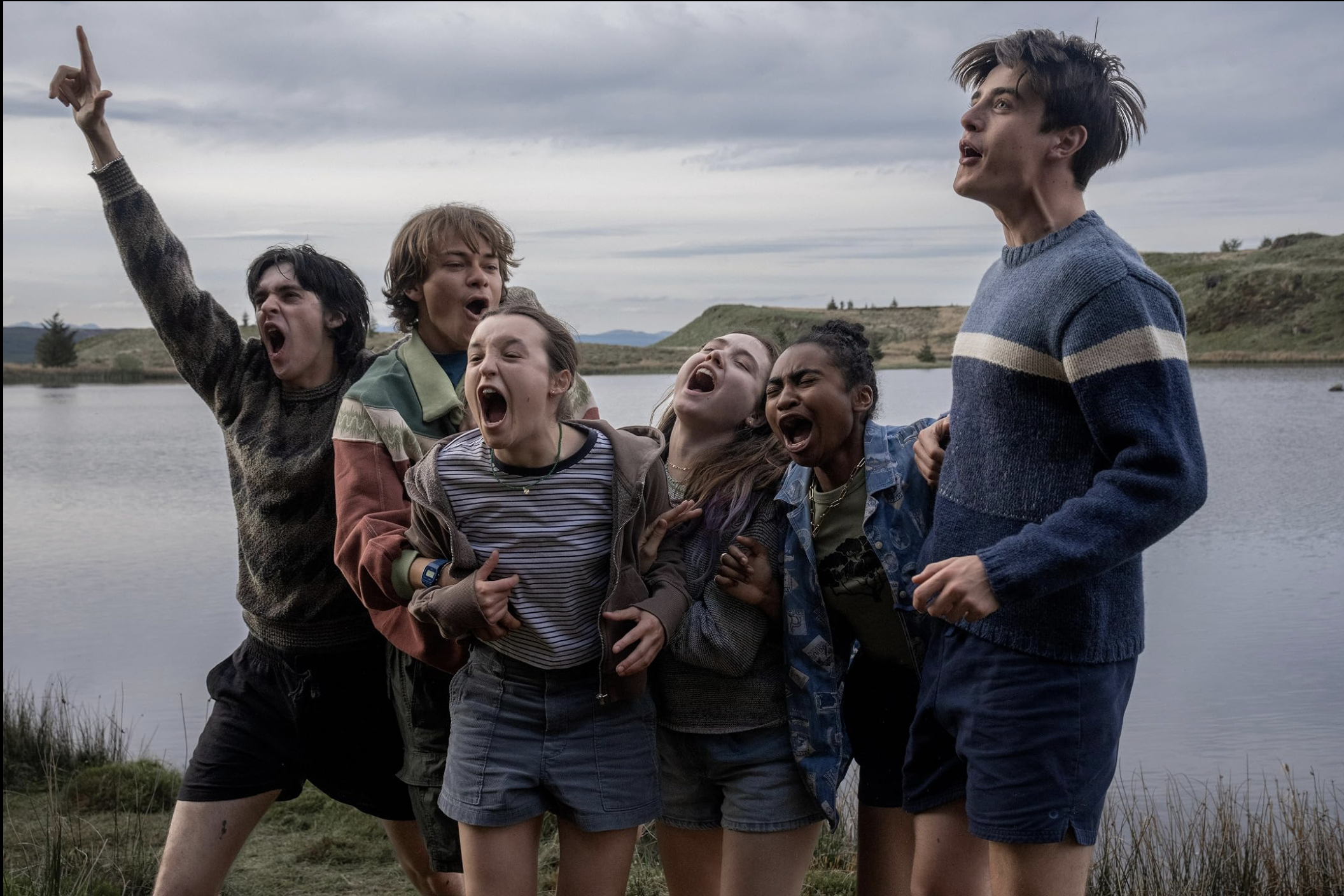
Bella Ramsay leading the excellent ensemble cast of Sunny Dancer
George Jaques’s direction and dialogue is light touch stuff – often very funny, and the tear jerks when they come feel genuine enough not to mawk the viewer.
At the heart of the movie is that rare thing – a properly character driven sex scene, without an iota of voyeurism, that I’m sure will touch the hearts or pretty much everyone who sees it. I absolutely dread film and TV sex – 99 times out of a hundred it is simultaneously excruciating, emotionally implausible and physically impossible. Here, it isn’t just tasteful but truthful – and, more importantly, hopeful, in an age when the narratives around teenage sex are unremittingly negative.
Or maybe I was particularly moved by this because I’m getting old – and my own youth is barely discernible in the rear view mirror. If that is clouding my judgement then that’s something for which there is absolutely no cure. 8/10
A few weeks ago I booked to see a preview of Shed: Exploded View at Manchester’s renowned Royal Exchange Theatre.
I’d overcome my reservations about the somewhat off-putting promotional graphic, because Phoebe Eclair-Powell’s new play had won the prestigious 2019 Bruntwood Prize for Playwriting and as a fellow scribe, and sometime producer, it’s professionally important for me to keep up with new work and emerging talent.
The day before the show, however, I received an email telling me that the play was one hour and forty minutes long – without an interval. This immediately filled me with anxiety. I am a survivor of Prostate Cancer – the single most common cancer in men in the UK today – and, as is well known, one of the long term side effects of treatment can be certain issues with bladder control. I’m one of the lucky ones, and by no means incontinent, but after about 75 minutes or so I’m going to need the toilet. Of course you don’t have to have cancer to worry about your bladder. According to the House of Commons Library, about 14 million people in the UK are affected by some degree of incontinence, and I’m not sure I’d even fit into that demographic, so in reality the number of people who would view this running time with concern could well be much greater. Lots of men have benign but enlarged prostates. Needing frequent access to a loo is an extremely common issue for older woman – not to mention anyone in the third trimester of pregnancy. In fact, it’s perfectly normal for anyone to need the loo after an hour and a quarter or so, especially if you’ve had a drink before the show (which theatres encourage you to do).
But the running time of Shed: Exploded View is nearly half-an-hour past my Bladder Klaxon, so when I say the prospect of one hour and forty minutes without an interval made me anxious – it’s not some trivial thing. Perhaps I should rephrase – it filled me with dread.
The friend I was coming with had to bail at the last minute (for other, non bladder-related reasons) but I struggled to find someone to pick up the ticket, and the reason two of them gave was that they simply couldn’t risk sitting through a show that long. Others said they might make it through, but they knew that they would spend the last half-an-hour struggling to concentrate, and therefore were unlikely to enjoy the show.
I posted my dismay on Facebook and was astonished by the chorus of agreement that came back, from people of all ages, including a young friend in the 27th week of pregnancy who had passed up on an offer of a ticket to see the Exchange show precisely for this reason.
A highly respected writer and director (over ten years younger than me I should add) posted the following, confirming how easy it is to solve this problem:
‘It’s a huge issue. [My last play] was one act, with no interval initially, and I found that 72 minutes was the official cut off time – we were guaranteed walk outs to the loo (annoying, as the show was 76 minutes). Luckily I was allowed to rewrite it as a two act play with an interval and the theatre made money; the audiences were happy; and the flow of the play worked so much better.I don’t think I’ll be visiting Shed unless I hear great reviews and sit at the end of a row.’
It’s not just Manchester’s Royal Exchange. A friend described an embarrassing incident at The Cursed Child in London, which apparently has a long act. They managed to get out of a tightly packed row, but then they felt too self conscious to return to the auditorium, missing the rest of the performance. This person has also vowed to eschew such long productions unless they can sit at the end of a row as well. We’re going to need a lot of rows.
And spare a thought for the poor actors. Another friend of mine was in a play at the Bristol Old Vic a few years back. He was on stage for the best part of ninety minutes without a break, and it was a challenge for him too.
The fear of urinating uncontrollably is a visceral one – with the prospect of terrible humiliation.
But at the same time, more and more shows run without intervals often far exceeding 90 minutes at a stretch. Personally I’d put a limit of 75 minutes on any single act. I would contend (and it would be interesting to do the research) that the number of people for whom this is an issue far exceeds the numbers of hearing impaired, visually impaired or neurologically divergent in any given audience – because of course bladder issues can and do affect anyone in any demographic.
In terms of accessibility, if I am blind or deaf or autistic or have mobility issues, a theatre will care for me – but if I’m an older man who has had cancer, I simply don’t matter.
A few years ago I was excited to see Circle Mirror Transformation at Home – another of Manchester’s theatres – where I was told by the usher on the way in, that the show was 1 hour 45 Minutes, but if I left for the toilet midway I would not be readmitted. I questioned whether that was even legal. The reason the theatre gave me for this stipulation was as follows:
‘The request […] was made by the actors who found it disruptive when patrons walked down the aisle to look for their seats.’
Well… as long as they get their priorities right. Perhaps the audience should just stay at home so the actors can concentrate.
There was later a concession that I should have been allowed back in, but would have had to watch the rest of the show from a row of seats reserved for toilet sinners right at the back – basically a sort of pant-wetters naughty-step. The ticket had been a birthday treat so I was in the most expensive seats with my wife, which I would lose access to because the show was too long for a normal human bladder. Seriously? As a footnote to that story, by way of apology, the theatre offered me complimentary tickets for their upcoming production of… (wait for it) … Long Day’s Journey Into Night – a play that famously runs for well over three hours. I kid you not.
(Note to reader – I’m about half way, if you need to pop out for a second.)
This trend in theatre for long single acts is – and I choose this word carefully – discriminatory. It discriminates against me, and anybody from the millions-strong cohort of those with similar issues. I wonder if earnest theatre makers believe it to be a trivial side-issue, perhaps even amusing. Yes, we make jokes about it, but that’s precisely because it’s frightening and humiliating. I know that many people are simply too embarrassed even to talk about it, let alone complain. They’d rather stay at home.
I’ve heard creatives argue: ‘We can’t possibly have an interval! It’ll destroy the atmosphere! It’ll break the flow!’ Well there’s nothing more distracting than a dozen people going to the toilet, even if you’re not personally worrying about your own bladder. Oh yes, and please don’t say ‘FLOW’!!!
It is often argued that films are regularly two hours plus in length, so what’s the problem? Well in a cinema it’s easy to pop out to the loo. Cinemas are loud and spacious. You’re not going to disturb anyone. There’s even an app called RunPee for this very purpose.
At the Royal Exchange, the seats are so tightly packed you fear for a DVT at the best of times. Your cramped knees are pressing on your bladder which exacerbates things – and on Tuesday night, I was wedged into the middle of a row. It was impossible to ask everyone to stand up for me without causing a major disruption. In a modern multiplex you are in a much more relaxed position so I can last a lot longer. At least a dozen people went to the toilet during Shed: Exploded Bladder, but they were all seated at the ends of rows. There was quite a sprint for the gents after the curtain-call for the rest of us! But even if a theatre makes it possible for people to come and go, I’ve paid to see the whole play. Why should I have to miss any of it because the theatre hasn’t had the consideration for its audience to provide an interval or wee break?
There are other issues too. I read, almost weekly, about the plight of theatres in these cash strapped times. But it’s hard to be sympathetic when, by insisting on not having an interval, surely the theatre loses a major revenue stream. This is a self-inflicted financial wound. Is the director’s and writer’s desire to have their play performed uninterrupted more important than the financial well-being of the theatre?
There are artistic implications as well. If I’m writing for itv, there will be ad breaks and I have to make sure that the audience is going to stick around. Even on the BBC, the episodic structure means I have to make the end of each tightly time-limited hour of drama compelling, so the audience will come back for more. In theatre, the act structure has a similar function. Last year I went to see Standing at the Sky’s Edge at the Sheffield Crucible. This was a wonderful show, the first act ended with a bang, and going to the bar (and having a wee!!!!) half way through just added to the excitement. Everyone was buzzing. When the second half started, the audience had gained in confidence and the atmosphere had ramped up several degrees. It was an unforgettable experience. I think this is a really good discipline for writers. Shed: Exploded View has many merits, but if you’re busting for a wee, it is doomed to feel overlong and full of unnecessary repetition, even when that repetition is an important stylistic device. Without a time limit the writer loses their sense of discipline.
Writers and directors (and I’ve done both jobs) need to get tattoos to remind themselves that the audience is more important than their play. Their play has to earn our attention, not keep us prisoner against our will. Going to the theatre is pricey, so people need a good reason to commit the time and considerable expense. Writers and directors need to put themselves in the shoes of their audiences, who will constantly be asking themselves whether trekking out to the theatre was worth the effort and, in this case, discomfort.
Of course, one of the big reasons we fork out the big bucks, is for the communal experience of simply being in a theatre. Standing at the Sky’s Edge was the model of this – where the interval allowed people to chat and share their feelings… it’s a social activity even when the subject matter is as serious as Shed. Without an interval, you’re scared to have a drink beforehand, you rush to the loo when it finishes, and then you bugger off to a pub where the drinks are cheaper. No wonder people would prefer to sit at home and watch Netflix.
Back to Tuesday night. I went to find the Front of House Manager. He was very, very sweet. I sensed from the weary look in his eye that he was only too aware of the problem. He advised me to put my feelings in writing and email the theatre management. Last night I got a reply, from someone called the ‘Audience Director’. Again, I kid you not. I clearly need to do what I’m told in future! She replied thus:
‘I would encourage anyone with non-visible access requirements to fill in the form on the access pages of our website, this will automatically tag your account with the relevant information and the Front of House team will be able to help.Alternatively, please do flag any concerns upon arrival to a member of our Visitor Experience staff, as we will do everything we can to accommodate any particular access requirements.’
‘Visitor Experience Staff’???
Hmmmm. Does that make me a ‘Creative Pen Operative’?
Anyway, I had talked to the nice Visitor Experience man and he told me to write the email, so I think we’re going round in circles here. Although I suppose he could have fitted me with a catheter.
But, good boy that I am – I was being ‘directed’ by the Audience Director after all – I had a look at the ‘Access Page’ where presumably I was to register the personal details of my Wracked Bladder, for future reference. The only vaguely relevant option was to ask for end-of-row seats, but as I’ve outlined above, that still discriminates against me because I miss part of the play and in an intimate theatre-in-the-round, like the Exchange, I’m still exposed as a theatrical bed-wetter.
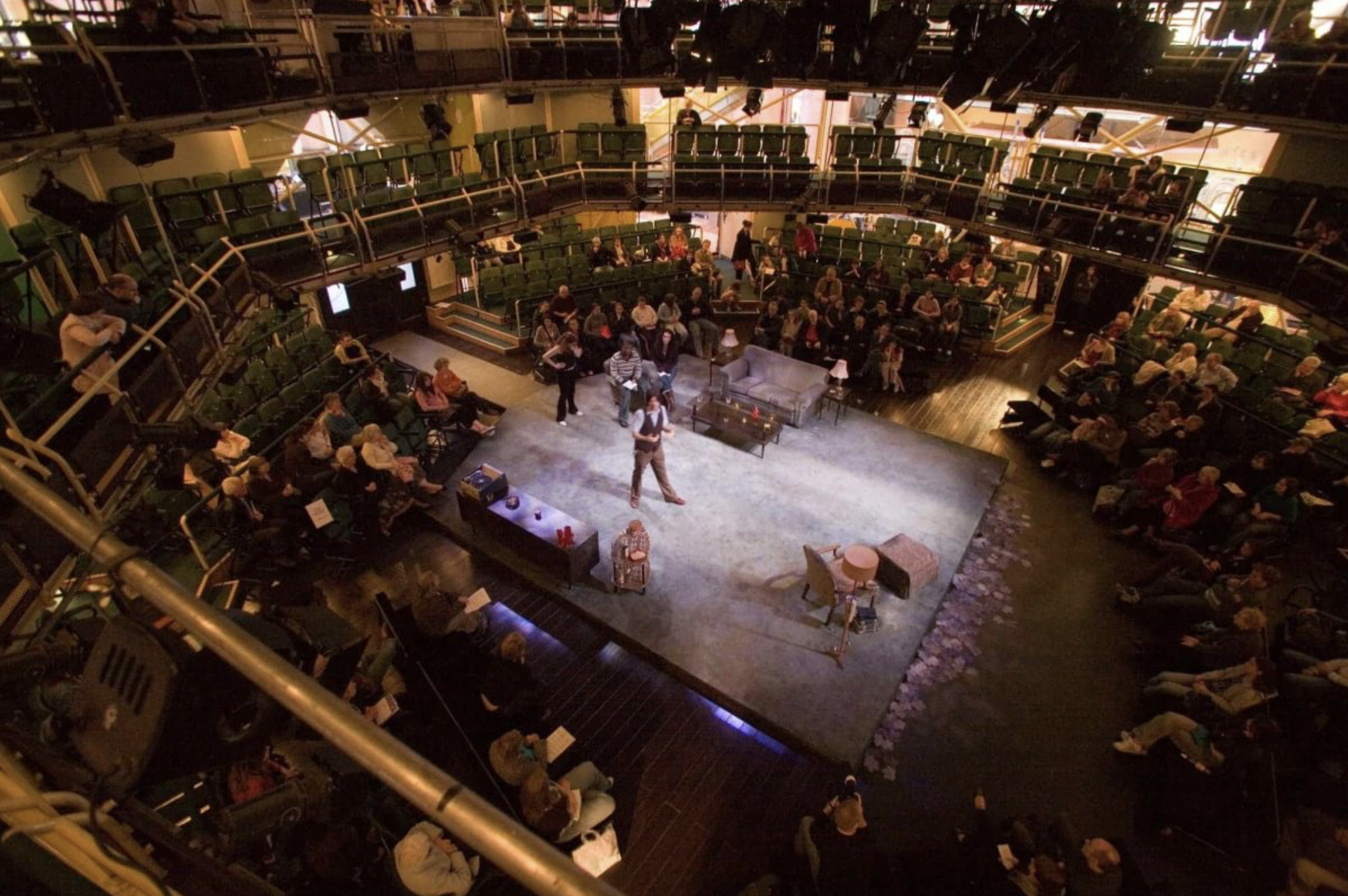
The Royal Exchange is a brilliant space but the seating is very cramped.
They’ve got it the wrong way around. The Royal Exchange is turning it back on me when they are the ones who created the problem in the first place. But as my director friend said on Facebook, it’s a very easy problem to fix. Let’s have an absolutely rock solid unbreakable rule that no single act of anything will ever exceed 75 minutes again. Once they make that decision then they’ll be amazed how easy it is to accommodate it, and how much more enjoyable the theatre experience will be for audiences. The running time of Shed is stopping people from coming, who otherwise might have made the effort. Who on earth does that serve? Is it acceptable to exclude audiences like this when the theatre owes its existence to public subsidy?
I love the Royal Exchange but I need to be confident that I can visit the theatre in future for pleasure, not punishment.
Lastly, I am painfully aware that the writer, Phoebe Eclair-Powell could well be reading my urinary burblings, and I want to emphasise that I bear no animus to her or her play. I’m a writer myself, and as a producer and director I’ve worked with new talent throughout my four decades in the industry. It’s vitally important for the future of British Theatre that people support her work and that of other young writers. I want her to have packed houses. I want the Royal Exchange to keep producing new drama. I also appreciate the vulnerability of writers arriving on the country’s most prestigious stages for the first time. So if Phoebe is reading this, then I sincerely and profoundly hope she is not offended. Although she would rightly be pissed off (so to speak) that I haven’t talked about the content of her play at all.
But that’s kind of the point. I can’t think about it, if I need the loo.
Ultimately, though, this isn’t Ms. Eclair-Powell’s responsibility. I would argue that it is the responsibility of the producing theatre to guide and protect newer talent – who are rightly heady with excitement about their creations – as they move forward in their careers.
I will say this, however. Shed: Exploded View is about domestic abuse – an incredibly important topic – but as any writer who has doubtless researched the subject in great detail will be aware, restricting people’s access to the toilet is, in itself, also a form of coercive control.
It’s such an easy problem to fix.
Can I go to the loo, now, please?
It’s a question that has troubled theatre for centuries
Shed: Exploded View runs at the Royal Exchange Theatre, Manchester until Saturday 2nd March 2024